
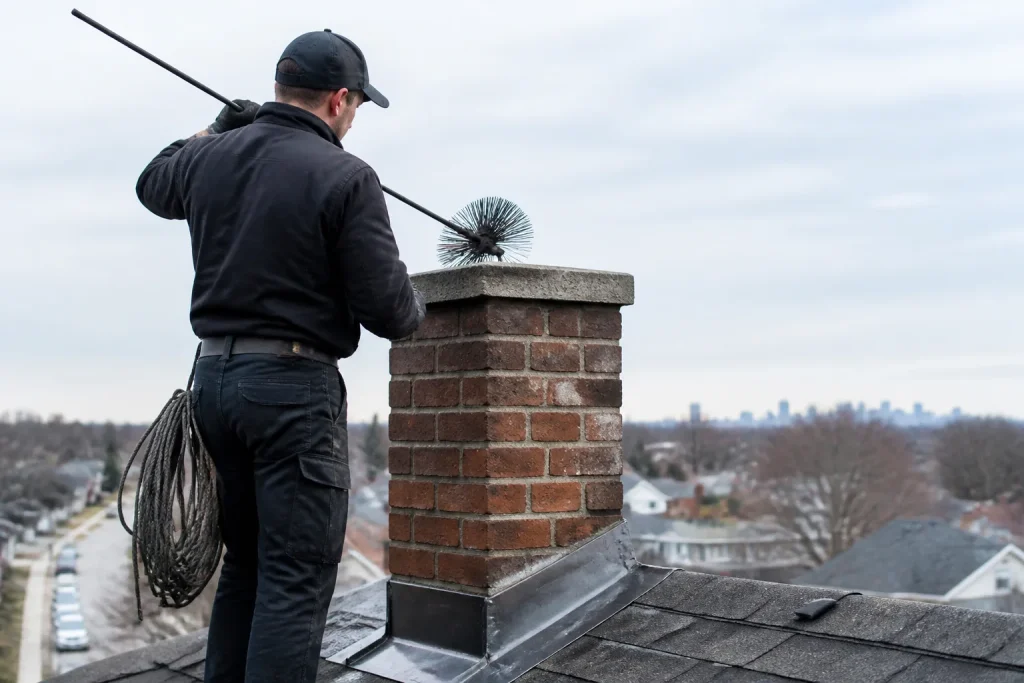
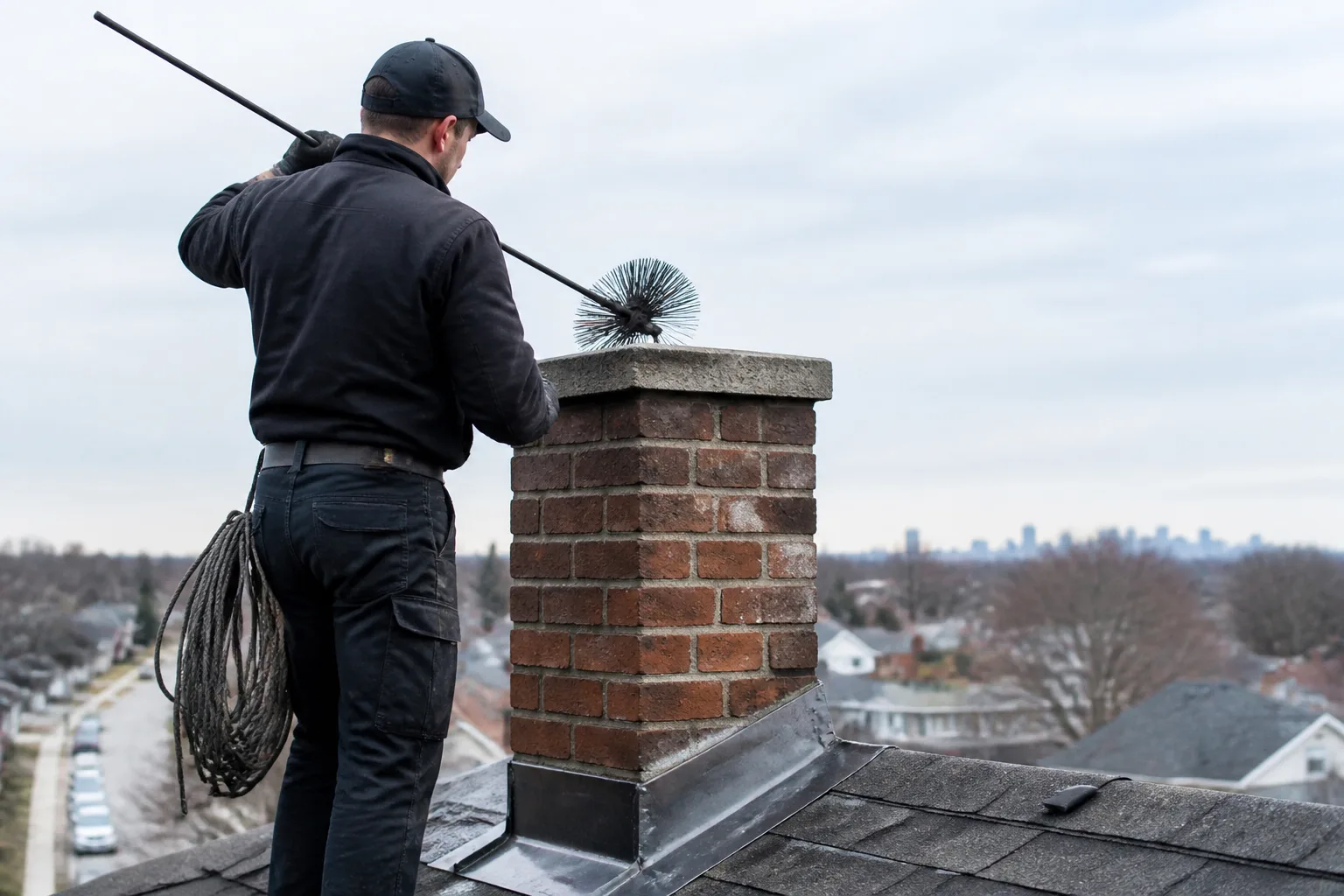
Top Signs You Need Chimney Cleaning Service – Don’t Ignore These
Most homeowners wait for a problem they can see: smoke backing into the room, a smell, a stain on the wall. The trouble is that the most dangerous condition inside a Canarsie chimney is often the quiet one. A fireplace that draws perfectly can have a flue lined with glazed creosote, the hardened, shiny form that neither drips nor smells but burns at temperatures above 2,000°F when it ignites. If you’d rather have a trained eye look at it than guess, call (833) 508-9953 and we’ll set up a free estimate.
Why the Most Dangerous Sign Is No Sign at All
The sign homeowners expect is smoke or odor. The sign that matters most is the absence of both. When a flue has been drawing well for years, nothing announces that a hard, glassy layer of creosote has been building on the inner walls a few feet above the firebox. It doesn’t flake off and land in the hearth. It doesn’t smell on a cold day. It just sits there, and every fire you burn feeds it a little more. When that layer ignites, it burns hot enough to crack clay tile and reach framing lumber.
In our experience, the homes where this builds up are the ones where the fireplace works “fine.” A strong draft carries smoke up and out cleanly, so the homeowner has no reason to look. That’s the trap. An annual sweep isn’t about fixing a problem you’ve already noticed. It’s about catching the invisible layer before it gets hard enough that a standard brush won’t touch it.
If you’re overdue, the honest place to start is a sweep, and a sweep without an inspection is a missed diagnosis. The chimney sweep gets the flue clear, and the inspection tells you what the brush found.
First, Second, and Third-Degree Creosote: What Each One Looks Like
Creosote isn’t one substance. It moves through stages, and each stage needs a different approach. Most sweep-only crews can handle the first two. The third is where the job changes.
- First-degree creosote is soot and light flaky dust, often a thin brown or black coating you can see on the damper and the inside of the smoke chamber. It brushes off easily. This is what a routine cleaning clears.
- Second-degree creosote is a crusty, flaky layer, sometimes brown or gray, sometimes with a tar-like sheen. It forms when flue gases cool and condense on the walls before they escape. It takes more work to remove but responds to proper sweeping and a stiff brush.
- Third-degree creosote is the hard, glazed, shiny form. It looks like black glass fused to the masonry or tile. It can’t be removed with a standard brush at all, because there’s nothing for the bristles to catch. It has to be addressed with a resurfacing system, which is where a HeatShield application comes in.
Each stage is caused by the same thing: flue gases condensing on cooler surfaces instead of exiting before they cool. The longer it condenses and the hotter the fire, the harder the deposit. Third-degree is a fire waiting for a spark.
Why a “Clean-Burning” Fire Can Make More Creosote, Not Less
This is the counterintuitive part, and it’s the piece most Canarsie homeowners have never heard. A fire that smolders under a closed damper, or one built with wet wood, makes more creosote than a hot, fully combusted fire, even though it feels “gentler” and burns longer. Here’s why. Creosote is unburned fuel. When wood burns incompletely, its gases drift up the flue and condense on cooler walls. A hot fire burns those gases in the firebox before they ever reach the flue, so there’s less to condense. A slow fire sends more unburned material up a cooler flue, and that material sticks.
The same logic explains wood choice. Green or unseasoned wood carries moisture that steals heat and cools the fire, producing more of exactly what you don’t want. Seasoned wood burns hotter and cleaner, so less creosote forms. In Brooklyn homes, where fireplaces are often used on cold evenings rather than all winter, this matters more than people realize: frequent small, cool fires are harder on a flue than occasional hot ones.
None of this is a reason to never light the fireplace. It’s a reason to know what your burn habits produce, and to have the flue checked accordingly.
Sensory Signs Beyond the Smoke Smell
Most homeowners know to watch for a smoky smell after a fire. But there are quieter sensory clues, easy to miss, that tell you the flue needs attention.
- Oily residue around the damper. Run a finger under the damper plate. A slick, tacky film means condensed creosote is forming and hasn’t dried hard yet.
- Fine black dust in the firebox. A light dusting of black soot across the firebox floor or the brick face is unburned material that settled instead of going up and out.
- The fireplace smells like a campfire on warm days. This is thermosiphon at work: warm air rises up the flue and draws cooler air back down, carrying stale smoke and creosote odor into the room. If your fireplace smells strongest in spring and summer, the flue is holding a buildup.
None of these are emergencies on their own. Together they’re a clear signal to book a sweep and let a professional look. We ask Canarsie homeowners to note the season they smell the fireplace most; it tells us a lot before we ever arrive.
When the Signs Point to Repair, Not Just Cleaning
Some signs mean the chimney needs more than a brush. These are the ones to take seriously, because they signal structural damage that a cleaning alone won’t resolve.
- Mortar debris in the firebox. Crumbling mortar dropping down means the flue or the firebox joints are failing. Loose mortar also means the tile or brick behind it may be cracked.
- White efflorescence on exterior brick. A white, chalky stain on the outside of the chimney is salt pushed out by moisture that has gotten into the masonry. It points to water getting in, often around the crown or a missing cap.
- A rusted damper plate. Rust means moisture, and moisture inside a flue leads to damaged liners. A damper that won’t seat right is a draft and safety problem.
These are the moments where a single contractor matters. A sweep-only crew will clean the flue and leave the mortar, the water intrusion, and the damper untouched. The chimney repair work and the cap and crown work are part of what we do, so the same company that finds the problem is qualified to correct it. Our technicians have up to 8 years of experience reading exactly these signs.
How Often Should a Canarsie Chimney Be Cleaned?
There’s no single right interval, because the answer depends on how your house burns. Three things move the number: frequency of use, wood species, and appliance type.
- Frequency of use. A fireplace burning most evenings through a Brooklyn winter needs a sweep at the start of the season and a check mid-season. Occasional fires, a handful a month, usually mean one annual sweep.
- Wood species and seasoning. Seasoned hardwoods burn hotter and cleaner, so creosote builds slower. Green or softwood burned wet builds faster and calls for more frequent checking.
- Appliance type. A wood-burning insert runs a hotter, more contained fire than an open fireplace and often produces less creosote per fire, but its tighter flue can clog faster. An open fireplace is more prone to condensation and slow cooling. Both need annual attention; the schedule differs.
A reasonable rule: if you burn through a full cord in a season, plan more than one look. If it’s occasional fires, an annual sweep before the first cold snap is the baseline. If you’ve bought a Canarsie home recently and don’t know the last sweep date, start with a sweep and inspection to establish a clean slate.
The Bottom Line
The signs worth trusting are often the quiet ones: no smoke, no smell, no obvious trouble, and a glazed layer building unseen. Learn the three stages of creosote, watch for oily residue, black dust, and the warm-weather campfire smell, and treat mortar debris, efflorescence, and a rusted damper as repair signals. We work with professional-grade brands like HeatShield, DuraFlex, and Olympia Chimney because professionals don’t cut corners on materials, and we name what we install so you know exactly what’s protecting your home. From the firebox to the crown, it’s one company and one call.
If you’re in Canarsie and need help, Chimney Sweep Canarsie offers free estimates. Call (833) 508-9953. We answer 24/7. Fast dispatch, 7am-7pm, Sunday through Friday. You can also explore our Chimney Sweep Canarsie services, including chimney cap & crown work.
Frequently Asked Questions
You need one if you see soot or creosote buildup on the damper or firebox, smell a campfire on warm days, notice oily residue or black dust in the firebox, or simply can’t remember the last sweep. The absence of smoke problems is not proof the flue is clean. Call (833) 508-9953 for a free estimate.
No. Third-degree, glazed creosote is fused to the flue wall and can’t be removed with a standard brush or a chimney log. It needs a resurfacing system applied by a trained professional, and attempting it yourself risks damaging the liner. Call (833) 508-9953 for a free estimate.
For an open fireplace used most evenings, plan a sweep at the start of the season and a check mid-season. Occasional use usually means one annual sweep. Green wood and frequent small, cool fires mean more frequent checking. Call (833) 508-9953 for a free estimate.
Creosote keeps building and hardening into the glazed stage, which burns above 2,000°F if it ignites and can crack tiles and reach framing. You also lose the inspection that catches failing mortar, water intrusion, and a rusted damper. Call (833) 508-9953 for a free estimate.
Written by the team at Chimney Sweep Canarsie.
Need Chimney Cleaning Help?
Call Chimney Sweep Canarsie - the local pro we connect you with is licensed and insured, with free written estimates in Canarsie.
(833) 508-9953